Best Aggressive Chess Openings for White in Blitz and Online Play
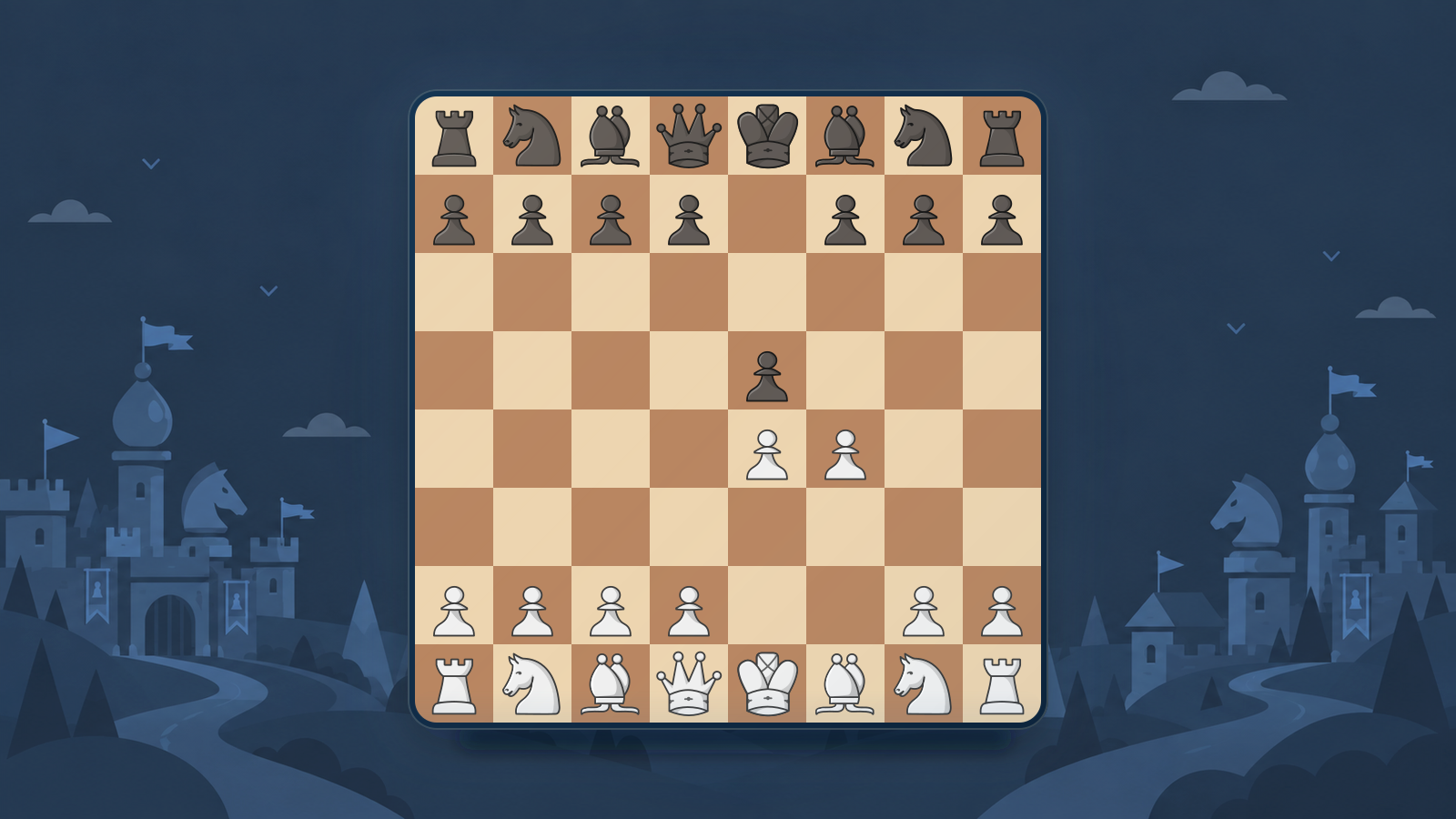
Top aggressive white openings for blitz
For blitz and fast online play, these three openings are practical aggressive options to consider: the King's Gambit, the Danish Gambit, and the Smith-Morra Gambit. The King's Gambit (1.e4 e5 2.f4) and Danish Gambit (1.e4 e5 2.d4) both target 1...e5 responses with immediate pawn sacrifices that open lines and generate rapid attacking chances before Black can consolidate. When Black plays the Sicilian Defense with 1...c5, the Smith-Morra Gambit (1.e4 c5 2.d4) offers the same philosophy: trade material for development and pressure. Together, these openings give tactical players several practical aggressive choices in blitz and online play.

| 1 | e4 | e5 |
| 2 | f4 |
What makes a white opening aggressive
An aggressive white opening is one that prioritizes early initiative, active piece placement, and forcing moves over quiet development. Rather than simply completing the opening phase safely, aggressive openings put Black under immediate pressure — demanding accurate responses and creating tactical complications that are especially punishing in blitz and fast online games where clock pressure compounds every mistake.
Playing as White carries a built-in strategic advantage: you move first, which means every aggressive idea lands one tempo ahead of Black's ability to respond. That first-move edge amplifies the effect of sharp, initiative-driven play. Openings like the King's Gambit or the Vienna Game exploit this by steering the game into unbalanced positions before Black has settled into a comfortable setup.
Four practical criteria help identify whether an opening is genuinely aggressive for online play: how quickly White generates threats, how much piece activity White gains in the first several moves, whether the position forces Black to react rather than develop freely, and how much discomfort the resulting positions create under time pressure.
| Opening | Core Goal | Style Fit | Blitz Suitability | Theory Load |
| King's Gambit | Fast kingside attack | Gambit-loving | High | Low–Medium |
| Danish Gambit | Rapid development | Gambit-loving | High | Low |
| Scotch Game | Central tension | Tactical | High | Medium |
| Vienna Game | Flexible attack | Tactical / Gambit | High | Low |
| Trompowsky Attack | Sidestep theory | Surprise weapon | High | Low |
| Smith-Morra Gambit | Attack Black's king | Gambit-loving | High | Low–Medium |
| London System | Solid structure | Positional | Medium | Low |
How to compare your options
Comparing aggressive openings means weighing initiative against risk. An opening that sacrifices a pawn for rapid development, such as a gambit line, scores high on forcing power but demands precise follow-through. A more structurally sound aggressive option, like the Scotch Game, generates pressure without material investment. For blitz specifically, the practical question is whether the resulting positions are easy to play quickly — familiar tactical patterns matter more than theoretical depth. If you want a broader look at white opening choices beyond the aggressive spectrum, Best Chess Openings For White covers the full range of options by style and goal.
Core aggressive openings and their first plans
Each of the openings below creates concrete problems for Black from the very first moves — unbalancing the position, seizing space, or forcing tactical complications before Black has time to settle into a comfortable setup. The profiles below focus on the first plan and the practical pressure each opening generates in blitz and online play.
King's Gambit (1.e4 e5 2.f4)
The King's Gambit offers a pawn on move two to rip open the f-file and accelerate White's development toward Black's king. After Black accepts with 2...exf4, White's immediate goal is to play 3.Nf3, castle kingside quickly, and use the open f-file as a battering ram. The opening demands that Black solve real problems under time pressure, which makes it especially punishing in blitz. The tradeoff is that White's own king needs careful handling, so it rewards players who enjoy sharp, double-edged positions.
Danish Gambit (1.e4 e5 2.d4)
The Danish Gambit sacrifices one or two pawns in the opening to flood the board with active pieces. After 2...exd4 3.c3 dxc3 4.Bc4 cxb2 5.Bxb2, White has developed both bishops in return for the two pawns Black accepted. The first plan is straightforward: develop fast, castle, and launch a direct attack before Black consolidates. In online blitz, opponents who grab both pawns often find themselves defending an unfamiliar position with little time to think.
| 1 | e4 | e5 |
| 2 | d4 | exd4 |
| 3 | c3 | dxc3 |
| 4 | Bc4 | cxb2 |
| 5 | Bxb2 |
If this active bishop play appeals to you, practise the moves in the interactive Danish Gambit lesson.
Vienna Game (1.e4 e5 2.Nc3)
The Vienna Game is a flexible and underestimated aggressive choice. White supports the center with the knight and keeps the option of a later f4 push, which can lead to a Vienna Gambit with 3.f4 if Black responds with 2...Nf6. The key idea is to keep White's options flexible and maintain active play without committing on move two.
| 1 | e4 | e5 |
| 2 | Nc3 | Nc6 |
| 3 | Bc4 | Nf6 |
Scotch Game (1.e4 e5 2.Nf3 Nc6 3.d4)
The Scotch Game challenges Black's center early in the opening. After the central exchanges, White can aim for active piece play and an unbalanced position. The first plan is to develop the bishops aggressively and create imbalances before Black reaches a solid middlegame. It is a reliable aggressive option for players who want pressure without the risk of a full gambit.
Smith-Morra Gambit vs. the Sicilian
Against the Sicilian Defense (1.e4 c5), the Smith-Morra Gambit — 2.d4 cxd4 3.c3 — offers a pawn for rapid development and a lead in piece activity. White's plan is to place rooks on the c- and d-files, post a knight on d5, and attack before Black's queenside majority becomes relevant. It can be a practical surprise weapon in blitz because it leads to immediate piece activity and unfamiliar positions.
| 1 | e4 | c5 |
| 2 | d4 | cxd4 |
| 3 | c3 | dxc3 |
| 4 | Nxc3 |
Trompowsky Attack (1.d4 Nf6 2.Bg5)
The Trompowsky Attack sidesteps mainstream d4 theory by immediately attacking Black's f6 knight. White's first plan is to disrupt Black's development, double pawns if the bishop is exchanged, and build a flexible pawn center. It can work well as a surprise weapon and often shifts the game toward practical positions where understanding matters more than memorized theory.
How the openings compare
Choosing between aggressive white openings becomes easier when you evaluate each one across the same practical criteria. The five dimensions that matter most for online play are aggression level, how much study the opening demands, how much material risk it carries, how well it holds up under blitz time pressure, and which opponent types it tends to punish most effectively.
Study investment and blitz suitability tend to move in opposite directions across these openings, which is worth keeping in mind as you decide where to focus your preparation time.
Which opening fits your style
Choosing the right aggressive opening depends less on what is objectively strongest and more on what kind of positions you enjoy calculating. The four player archetypes below map directly to the openings covered in this article.
- Gambit lover: The King's Gambit and Danish Gambit are your natural home. Both sacrifice material early to rip open the center and generate immediate attacking chances. The tradeoff is real: you must be comfortable calculating sharp tactics under blitz time pressure, because Black can accept the pawn and fight back concretely.
- Tactical attacker: The Scotch Game gives you an open, unbalanced position without surrendering material. You get active pieces and real winning chances while keeping the position objectively sound — a strong fit if you want aggression with a safety net.
- Surprise-weapon seeker: The Trompowsky Attack (1.d4 Nf6 2.Bg5) sidesteps mainstream theory almost immediately. It suits players who want to avoid heavily memorized lines and force opponents to think independently from move two.
- Solid-aggressive player: The Vienna Game offers a controlled form of aggression — flexible development, central pressure, and the option of a later f4 pawn push if Black cooperates.
If you are still exploring which style suits you, the Aggressive Chess Openings & Tabbed Adviser offers a diagnostic approach to narrowing down choices based on your preferences.
How to pick your aggressive opening
Picking the right aggressive opening comes down to a handful of honest questions about how you actually play, not which opening looks most impressive on paper. Work through these criteria before committing to a weapon:
- Time control: In very fast games you need positions where your plan is simple and familiar. The Vienna Game and Scotch Game give you a clear structure fast. In blitz, you may have room for sharper gambits like the King's Gambit or Danish Gambit.
- Gambit comfort: If you enjoy sacrificing material for activity, gambit lines reward you heavily online where opponents rarely know the correct defensive path. If you prefer keeping the material balance, the Trompowsky Attack or Scotch Game let you stay aggressive without giving pawns away.
- Study budget: Some openings punish you quickly if you deviate from established theory. Choose an opening whose first plans you understand and can play when your opponent deviates.
- Opponent tendencies: Online opponents at club level frequently misplay sharp positions under time pressure, so surprise value matters. A less common choice like the Trompowsky can unsettle opponents before the game truly begins.
- One weapon or two: Choose a first move, then learn one practical response to Black's main replies. For example, a 1.e4 player needs a plan against both 1...e5 and 1...c5.
Practical note: If you are newer to aggressive play, the Aggressive Chess Openings & Tabbed Adviser uses four diagnostic questions to help narrow your choice before you invest study time.
Common mistakes with aggressive openings
Aggressive openings reward players who understand the key ideas behind each system, but they punish those who treat aggression as a substitute for sound development.
Attacking before finishing development
Launching an attack before your pieces are coordinated is the single most common error in aggressive play. Aggressive openings are designed to fight for initiative early, but that initiative evaporates quickly if your rooks are still on their starting squares when the middlegame begins. If White pushes several pawns while the kingside pieces remain undeveloped, Black can consolidate and challenge the center before White has an attack.
Moving the queen too early
An early queen move often loses time because minor pieces can attack the queen while finishing their own development. In fast online games, this tempo loss is especially costly — your opponent gains free moves while you retreat.
Watch out: Bringing your queen out before move 6 or 7 in most aggressive lines signals a plan, not a threat. If your opponent can simply develop with tempo, you've handed them the initiative you were trying to seize.
Switching openings after every loss
Changing your aggressive opening every few games prevents you from learning its core ideas deeply enough to use them reliably. Aggressive openings encourage spontaneous gameplay and strategic thinking, but that only works when you recognize the recurring patterns. Stick with one system long enough to understand why you lost, not just that you lost.
Frequently asked questions
What is the most aggressive opening for White in chess?
The King's Gambit (1.e4 e5 2.f4) has a strong claim to this title. White offers the f-pawn to challenge Black's center; if Black accepts, the f-file can open, creating direct attacking chances before Black has time to consolidate. The Danish Gambit and the Vienna Game with 2.Nc3 followed by an early f4 are close rivals, each generating sharp, unbalanced positions where White pushes for a quick initiative. Choices like the King's Gambit aim to create direct practical pressure and active piece play rather than slow positional maneuvering.
Which aggressive white openings work best in blitz and rapid games?
In fast time controls, openings with familiar plans can help you move confidently under time pressure. The Trompowsky Attack (1.d4 Nf6 2.Bg5) sidesteps mainstream theory and puts immediate pressure on Black's knight, making it a reliable surprise weapon. The Scotch Game (1.e4 e5 2.Nf3 Nc6 3.d4) opens the position quickly and leads to concrete tactical battles where clock pressure matters. The Vienna Game is another practical choice because it steers toward sharp middlegames without demanding deep memorization of long theoretical lines.
What are the best gambit openings for White?
The King's Gambit and the Danish Gambit are the two most recognizable gambit options for White. The Danish Gambit (1.e4 e5 2.d4 exd4 3.c3) offers a pawn — or even two — in exchange for rapid development and open lines toward Black's king. Both gambits reward players who enjoy tactical complications and are comfortable playing without material equality. For a broader look at how these fit into a complete color-specific repertoire, Best Chess Openings For White covers the wider landscape of options beyond purely aggressive lines.
Is the King's Gambit good for online chess?
The King's Gambit can be effective in blitz because it creates immediate imbalances and direct pressure. The board near the start of this guide shows the position after 2.f4, when White offers the f-pawn for attacking chances.
The tradeoff is that Black can decline the gambit or return the pawn at a moment of their choosing, so understanding the key ideas — rapid development, f-file pressure, and a quick kingside attack — matters more than memorizing every response. For players who enjoy tactical, initiative-driven chess, the King's Gambit remains one of the most entertaining and practically effective choices in online play.
The best aggressive system for most players
For intermediate players who want maximum aggression with minimum memorization, a two-opening blueprint covers the vast majority of online games. Against 1...e5, the Vienna Game (1.e4 e5 2.Nc3) is a practical choice that can lead to sharp positions without heavy theory. Against the Sicilian Defense (1...c5), the Smith-Morra Gambit (1.e4 c5 2.d4 cxd4 3.c3) offers immediate piece activity and concrete attacking ideas that catch unprepared opponents off guard in blitz time controls.
Together, these two systems create direct practical pressure from move one without demanding deep theoretical preparation. Players who prefer central play without sacrificing a pawn can consider the Scotch Game instead. For a broader look at white opening choices beyond aggressive systems, Best Chess Openings For White is a useful next step.